HHZ Vapes17 products
 H2 Superior21 Vapes
 Flowers61 products

 I Love Pot
 Sheesh
 OnlyGrams
 Canapuff







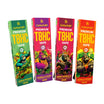

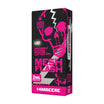

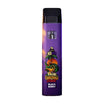


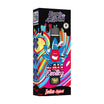

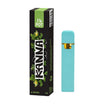






Table of contents
- What is Kanna?
- Kanna effects: what users report
- Kanna experiences: how to classify the reports
- State of research: what research on mesembrine shows
- Kanna side effects
- Is kanna a drug? A sober classification
- Is Kanna legal in Germany?
- Kanna, kougoed, kokanna: the terms briefly explained
- Kanna forms: powder, extract and vape
- Buying Kanna: what the shop offers
- Frequently asked questions about kanna
In short: Kanna is the South African succulent Sceletium tortuosum, whose alkaloids such as mesembrine are being researched. Kanna is not a cannabinoid and has nothing to do with hemp. Users usually describe the effect as mild, for example as a slightly lifted mood, and there are only a few small clinical studies. In Germany, kanna is not named in either the BtMG or the NpSG (as of October 2026).
Kanna (Sceletium tortuosum) is a succulent from South Africa whose alkaloids, above all mesembrine, are being researched. Users usually describe the effect of Kanna as mild: a slightly lifted mood, a relaxed feeling, sometimes more desire to talk. These are user reports and not a promise. There are only a few clinical studies, they are small and work with a standardised extract in tablet form. In Germany, Kanna is not named in either the BtMG or the annexes of the NpSG (as of October 2026).
What is Kanna?
Kanna is the common name of the plant Sceletium tortuosum. It belongs to the ice plant family (Aizoaceae) and grows as a low, creeping succulent with fleshy leaves in the dry regions of western South Africa. In 1753, Linnaeus still described it as Mesembryanthemum tortuosum, a name that more recent scientific literature uses again. The names Sceletium, Channa and Kougoed also appear on the market. Kougoed comes from Dutch and roughly means “something to chew”.
The name reveals the tradition. The Khoikhoi and San probably used the plant long before European travellers and settlers at the Cape wrote the first written reports about it. The above-ground parts were fermented and dried and then chewed or snuffed. Among other things, fermentation reduces the oxalic acid content of the fresh leaves.
Important for classification: Kanna is not a cannabinoid and has nothing to do with hemp. The plant contains its own group of alkaloids, of which mesembrine, mesembrenone, mesembrenol and tortuosamine are the best known. Online, Kanna is often mentioned alongside kratom, although the two plants have nothing in common botanically. Why the comparison still comes up so often is explained in the article Kanna vs. kratom.
Want to try Kanna yourself? In the category Buy Kanna you'll find powder, hash and pens. The vaporizable version is listed separately under Kanna vapes. More plants from the same family are collected in the smartshop.
Kanna effects: what users report
How does Kanna work? For everyday use, there are almost only user reports on this. They are subjective and depend on the person, how they feel that day, the amount and the product. With this caveat, the reports paint a fairly consistent picture:
- Many users describe Kanna as mild and rather subtle. Some say they hardly notice anything.
- A slightly lifted mood and a relaxed, more open feeling in contact with others are often mentioned.
- According to most reports, the head stays clear.
- With larger amounts, some report tiredness, lightheadedness or a feeling of being beside themselves.
With Kanna extract too, according to the reports, the experience depends clearly on the product. Extracts are sold with ratios such as 10:1 or 20:1, and the mesembrine content varies between manufacturers. Fermented and unfermented material also differ. That is why reports about one product cannot simply be transferred to another.
Kanna experiences: how to classify the reports
Most user reports on Kanna come from forums, videos and retailer sites. None of these sources is neutral. Retailers describe their products positively, and in forums it is mainly people who have experienced something notable who write. Those who noticed nothing speak up less often.
Nevertheless, a pattern repeats itself. Those who expect a clear change are often disappointed by Kanna and call it weak. Those who approach it with low expectations tend to describe a quiet shift in mood. Your own expectations therefore shape how a report turns out. In addition, some reports combine Kanna with alcohol, cannabis or other substances. What is then described can no longer be attributed to any single substance.
For you, this means: user reports show a direction, but they do not predict how you yourself will experience something.
State of research: what research on mesembrine shows
There is research on Kanna, but the data remain thin. In the lab, mesembrine and related alkaloids inhibit the reuptake of the messenger substance serotonin and the enzyme PDE4. Manganyi and colleagues provide an overview of this (2021, Molecules 26(9), article 2557). What happens in a test tube, however, says little about what reaches humans.
Studies in humans exist only with Zembrin, a standardised extract in tablet form:
- Terburg et al. (2013, Neuropsychopharmacology 38(13), pp. 2708 to 2716) examined 16 participants double-blind against placebo in a brain scanner. After a single dose, the amygdala, a brain region involved in processing threats, reacted less strongly to images of fearful faces.
- Nell et al. (2013, Journal of Alternative and Complementary Medicine 19(11), pp. 898 to 904) only tested tolerability in 37 adults over three months. They found no notable differences from placebo in vital signs, ECG and blood values. Headaches were the most common complaint, and were even more frequent in the placebo group.
- A recent review by de Jong et al. (2026, Planta Medica 92(8), pp. 806 to 823) rates the results as mixed. The studies are small, the participants mostly without illness, and not all studies show consistent results. Large studies are missing.
These papers describe a state of research and not a benefit. They apply to a specific tablet extract and do not allow any statement about Kanna powder, hash or vapes.
Kanna side effects
There are no systematic data on side effects of Kanna outside the tablet studies mentioned. The most frequently mentioned in user reports and by drug counselling services are:
- headaches
- dizziness and slight balance problems
- tiredness and lightheadedness, especially with larger amounts
- reduced appetite
- orientation problems with larger amounts
Long-term effects have not been studied. The Leipzig drug counselling service Drug Scouts also points out in its lexicon (as of November 2010) that in people with a predisposition to psychosis, a psychosis can be triggered. Kanna products are therefore not for people under 18, during pregnancy and breastfeeding, with pre-existing mental health conditions or if you take medication regularly. If you notice any complaints, talk to a doctor.
Interactions with antidepressants
The most important warning concerns medications that affect the serotonin balance. In their review (2021, Current Neuropharmacology 19(9), pp. 1384 to 1400), Brendler and colleagues advise against using Kanna together with antidepressants. They explicitly mention SSRIs such as sertraline, citalopram or fluoxetine and SNRIs such as venlafaxine or duloxetine. According to the authors, there are so far neither reports of serious interactions nor studies showing such interactions. The caution follows from the mechanism that mesembrine shows in the lab. You can find the text of the paper freely accessible in the review by Brendler et al. on PubMed Central. Drug Scouts also advise against combining Kanna with alcohol or other drugs, because the result then cannot be estimated.
Is kanna a drug? A sober classification
Whether kanna is a drug depends on what you mean by the word. In the legal sense, kanna is not a narcotic in Germany: neither the plant nor alkaloids such as mesembrine are listed in Annexes I to III of the BtMG, and they are not named in the annexes of the NpSG either (as of October 2026). We are not aware of any reliable overall classification by the authorities.
In the sense of a substance that affects how you feel, things look different. In the lab, mesembrine and related alkaloids inhibit the reuptake of serotonin and the enzyme PDE4. Users report a slightly lifted mood. The drug counselling service Drug Scouts lists kanna in its lexicon and points out that it can trigger psychosis in people predisposed to it. Because of the mechanism, experts also advise against using kanna together with antidepressants.
So kanna is not listed as a narcotic, but it is not just any herb either. The plant has nothing to do with cannabinoids, even though it is often sold in the same context. What the legal situation for cannabinoids looks like is shown in the overview of cannabinoids in Germany.
Is Kanna legal in Germany?
Kanna and its alkaloids such as mesembrine are not mentioned in Annexes I to III of the German Narcotics Act. They are also not listed by name in the annexes of the New Psychoactive Substances Act (NpSG) (as of October 2026). You can read the wording in Annex I of the BtMG on gesetze-im-internet.de. We are not aware of any reliable overall official classification of Kanna, and any amending ordinance can change the status.
Food law is a separate question. Plants that were not consumed to a significant degree in the EU before 15 May 1997 are considered novel foods (Novel Food, Regulation (EU) 2015/2283) and require authorisation before being sold as food. Brendler et al. (2021) classify Sceletium as “novel” in this sense. We are not aware of any authorisation of Kanna as a food. At Cannabude, Kanna products are sold as ethnobotanical collector's items and not as food.
Kanna, kougoed, kokanna: the terms briefly explained
Around kanna you will come across many names that are easy to mix up. A quick overview helps you when reading product descriptions and user reports.
- Kanna: the common name of the plant Sceletium tortuosum, a low, creeping succulent from the west of South Africa.
- Mesembryanthemum tortuosum: the name under which Linnaeus described the plant in 1753. More recent scientific literature uses it again.
- Sceletium, channa and kougoed: other names used in the trade. Kougoed roughly means “something to chew” and refers to the traditional use, where fermented herb was chewed or snuffed.
- Mesembrine: the best-known alkaloid of the plant, alongside mesembrenone, mesembrenol and tortuosamine.
- Kanna extract: an enriched form, often stated with ratios such as 10:1 or 20:1. The mesembrine content varies between manufacturers.
- Kokanna: part of the product name Buff Kokanna, a powder that contains icariin from the Epimedium plant in addition to kanna extract.
Similar-sounding terms like “canna”, on the other hand, refer to cannabis and have nothing to do with kanna. Besides kanna, you will also find other plants in our range, for example blue lotus.
Kanna forms: powder, extract and vape
Today, Kanna is almost only offered in processed form. The forms differ in how far the plant material has been processed:
| Form | What it is | At Cannabude |
|---|---|---|
| Kanna powder | ground plant material or powdered extract, fermented or unfermented | Buff Kokanna 1 g (Kanna extract with icariin) |
| Kanna extract | enriched form with a higher alkaloid content, often stated with a ratio such as 10:1 or 20:1 | Kanna Hasch, a soft, mouldable extract |
| Kanna vape | concentrate based on Kanna extract in a disposable vaporiser | Kanna Vape Pens with 1 ml |
| Tea, capsules | dried herb or filled powder | not in the range |
Which form suits you is mainly a question of format and aroma. There are no reliable comparisons of the forms, because no study has examined powder, extract and vape side by side. What makes a Kanna vape pen technically and what you can look out for in the hardware is explained on the page Kanna Vape Pen.
Buying Kanna: what the shop offers
You can buy Kanna at Cannabude in the Kanna category. There you will find the Kanna Hasch, the powder Buff Kokanna and the Kanna Vape Pens. According to the product text, the Kanna Hasch is dark, soft and mouldable and has a spicy, herbal, slightly earthy aroma. It is currently available as 1 g, 2 g and 5 g. Buff Kokanna is a powder in a 1 g pack that, in addition to Kanna extract, also contains icariin from the plant Epimedium. The Highlander flower, which is also in the category, does not state a Kanna content in its product text and is not one of the Kanna products.
You can find the vape pens collected under Kanna Vapes. Currently available are the flavours Cherry, Eisbonbon and Nature, each with 1 ml. According to the product text, all are nicotine free and declared with 0.0 % THC. The exact composition is stated on each product page. Kanna products are only available from us for people aged 18 and over.
Frequently asked questions about kanna
What is kanna?
Kanna is the succulent Sceletium tortuosum from South Africa, whose above-ground parts were traditionally fermented, dried and then chewed or snuffed. Its best-known alkaloids are mesembrine, mesembrenone, mesembrenol and tortuosamine.
How does kanna work?
Users usually describe the effect as mild, with a slightly lifted mood and a relaxed feeling, while some notice hardly anything. These are user reports, not a promise.
Is kanna a drug?
Legally, kanna is not named in either the BtMG or the NpSG in Germany (as of October 2026). In the lab, however, the alkaloids interfere with the serotonin system, which is why combining it with antidepressants is advised against.
Is kanna legal in Germany?
Kanna and mesembrine are not listed in the annexes of either the BtMG or the NpSG (as of October 2026). We are not aware of any approval as a food, and Cannabude sells kanna as an ethnobotanical collector's item.
Does kanna have anything to do with cannabis?
No. Kanna is not a cannabinoid and is not botanically related to hemp, even though the name sounds similar.
What side effects does kanna have?
The ones mentioned most are headaches, dizziness, tiredness and reduced appetite, and with larger amounts also disorientation. Long-term effects have not been studied.