HHZ Vapes18 products
 H2 Superior21 Vapes
 Flowers62 products

 I Love Pot
 Sheesh
 OnlyGrams
 Canapuff














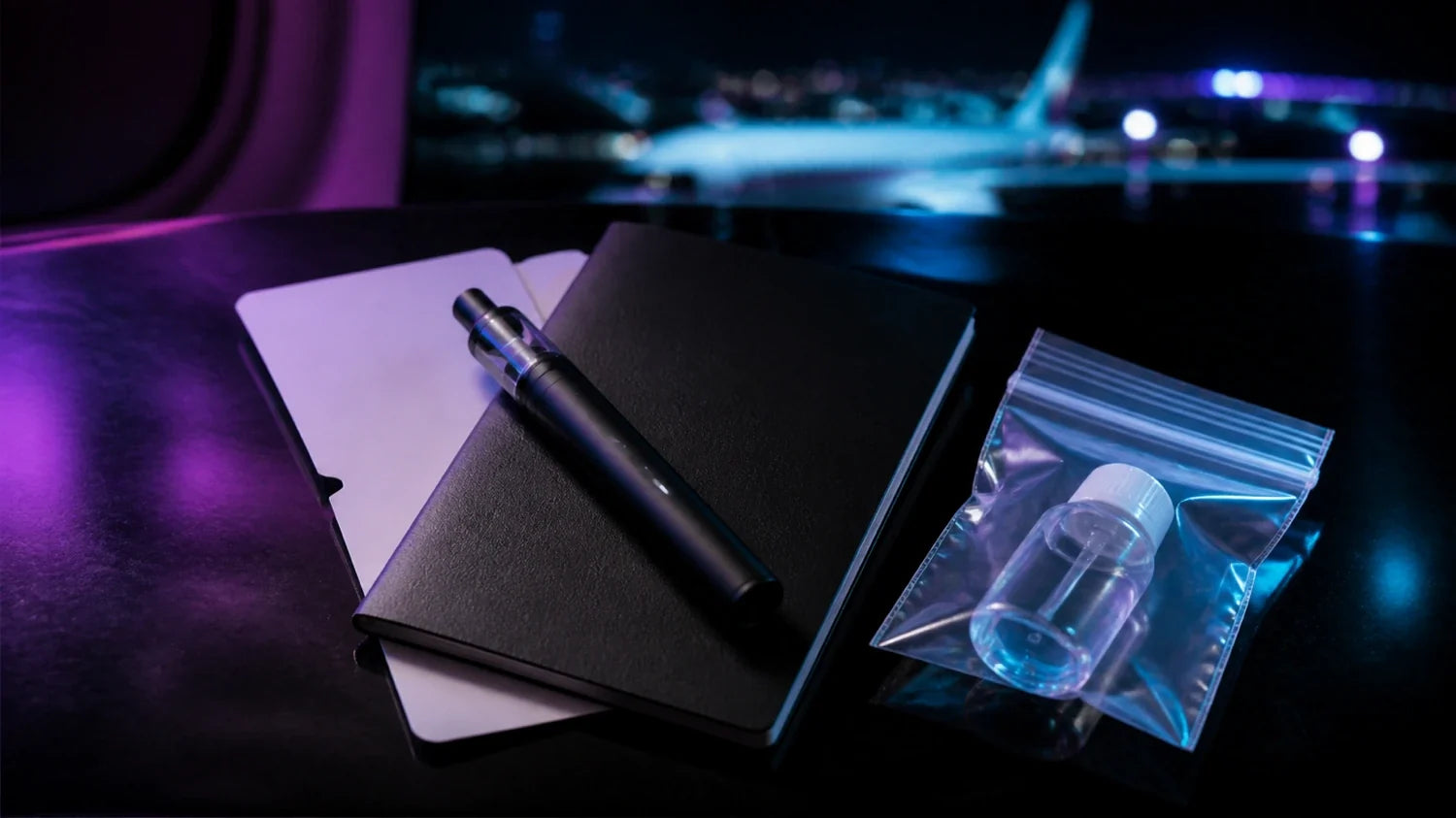
Table of contents
- Vape in carry-on or checked luggage? The basic rule
- How many vapes can you take on a plane?
- Vape battery on a plane: spare batteries and power banks
- Vape liquid in carry-on: the 100ml rule
- Vape rules at Lufthansa, Eurowings, Ryanair and co.
- Can you vape on a plane? Not even in the toilet
- Taking a vape abroad: it comes down to the contents
- Countries with strict vape rules
- Security check: what happens to your vape
- The return trip counts too
- Checklist: travelling with your vape
- Travelling responsibly
Yes, a vape can go with you on a plane, but only in your carry-on, and it stays switched off on board. That answers the first of two questions your vape raises when you travel. The second comes up after landing: whether the device is also allowed into your destination country depends on what is inside it, and that question is by far the trickier one.
This guide works through both topics step by step, from the battery rule through airline differences and country examples to a checklist for your trip.
Vape in carry-on or checked luggage? The basic rule
The most important rule concerns the battery. Devices with a lithium battery must not go in checked luggage; they have to travel in your carry-on. The reason is fire safety: a lithium battery overheating in the cargo hold would go unnoticed, whereas in the cabin it is spotted immediately and the crew can react. This rule comes from aviation's international dangerous-goods regulations as set by the airline association IATA, and it applies worldwide at practically every airline, regardless of the ticket price.
For transport in your carry-on: switch the device off and secure it against accidental activation. Many vapes can be locked by pressing the fire button several times. A hard case gives extra protection against something pressing on the button inside a full backpack. A device that heats up unnoticed in your luggage is exactly the scenario the rules are meant to prevent.
How many vapes can you take on a plane?
There is no single fixed number, but a clear direction: quantities for personal use are allowed. Many airlines follow the IATA baggage rules for electronic devices, which allow up to 15 devices with a lithium battery and up to 20 spare batteries per person. A normal trip with two or three devices is well below any limit.
Aviation security, however, only covers part of the rules. The customs authority of your destination country sets its own limits, and those are often much tighter. Anyone entering with a conspicuous number of devices quickly raises suspicion of commercial import, with corresponding duties or confiscation. So for larger quantities, check the customs rules of your destination country as well as the airline.
Vape battery on a plane: spare batteries and power banks
Spare batteries and power banks follow the same logic as the device: carry-on only, never in the checked bag. In addition, loose batteries need short-circuit protection. Store them individually, for example in the original packaging or a battery box, or tape over the contacts. A loose battery that meets keys or coins in your bag can short-circuit and heat up sharply.
With power banks there is also the capacity limit. Up to 100 watt-hours they are allowed at most airlines without registration, which covers practically every common model. Between 100 and 160 watt-hours you usually need the airline's approval; above that it is not allowed. The watt-hours are printed on the casing. If the figure is missing, security may confiscate the power bank.
Vape liquid in carry-on: the 100ml rule
Liquids count as liquids and fall under the familiar carry-on rule: individual containers up to 100ml, collected in a transparent, resealable bag of no more than one litre. Larger amounts of liquid may go in checked luggage, but the device with its battery explicitly may not. So if you take a lot of liquid, split it up: bottles in the checked bag, device in the carry-on.
A practical tip for the flight itself: with the pressure change in the cabin, the air in the tank expands and can push liquid out. Do not fill the tank to the brim before the flight, carry the device upright if possible and pack it in a small bag in case something does leak. Refill bottles belong tightly sealed in the liquids bag.
Vape rules at Lufthansa, Eurowings, Ryanair and co.
Many people search for the rules of their specific airline. The good news: on the core points there is nothing to compare, because they come from international regulations and apply identically at Lufthansa, Eurowings, Ryanair, Condor and practically every other airline.
| Question | Answer at practically all airlines |
|---|---|
| Vape in carry-on | Allowed, switched off and secured |
| Vape in checked luggage | Prohibited because of the lithium battery |
| Using on board | Prohibited, no exceptions |
| Charging on board | Prohibited |
| Spare batteries | Carry-on only, secured against short circuit |
| Liquid in carry-on | Up to 100ml per container in the liquids bag |
Differences between airlines concern details: the exact upper limit for devices and spare batteries, power-bank capacities, or wording on storage on board. A quick look at your airline's baggage page before the flight gives you certainty, but does not replace any of the basic rules above.
Can you vape on a plane? Not even in the toilet
No, and this point deserves clarity because it is regularly underestimated. Vaping on board is prohibited at every airline. The onboard toilet is one of the most closely monitored areas on the plane, and the smoke detectors there trigger on vapour too. Anyone who sets off the detector or even tampers with it risks a report, high costs and, depending on the country, criminal consequences. In the event of an unscheduled landing, the costs can be passed on to whoever caused it.
Charging during the flight is prohibited too. So the device stays off and stowed for the entire duration of the flight. If you have long flights ahead, plan breaks on the ground and charge before or after the flight.
Taking a vape abroad: it comes down to the contents
This is where most people make the decisive mistake, because they check the device and forget the contents. The device itself is unproblematic in many countries. The active ingredient it contains, on the other hand, is classified completely differently from country to country. Cannabinoids that are legal in Germany can count as narcotics elsewhere, and then entering the country is no longer about a regulatory offence but a drug offence.
The safe approach is always the same: before the trip, check the legal situation of your destination country for the specific contents. The device can be harmless and the contents still prohibited. Do not rely on a product being legal just because you were able to buy it at home. When in doubt, the active ingredient stays at home and only the empty device travels along. You can find guidance on the situation in Germany in our overview of the currently legal cannabinoids.
For the check itself: do not travel with unlabelled liquids or refilled cartridges. Original packaging, a label and a receipt make it immediately clear to security staff or customs what you are carrying if there are questions. That does not replace a permissible legal situation, but it prevents unnecessary discussions about an otherwise permitted product.
Countries with strict vape rules
Some popular destinations have rules that are much stricter than many expect. The following examples show the range. The situation can change at any time, so the rule is: before every trip, check the official advice of the Foreign Office and the destination country.
| Country | Situation for vapes in general |
|---|---|
| Thailand | Prohibited; even possession and import can lead to heavy fines or worse |
| Singapore | Prohibited; severe penalties even for people in transit |
| India | Sale and import prohibited |
| Turkey | Sale prohibited, import only tolerated in very limited amounts for personal use |
| Egypt | Rules inconsistent and unpredictable in practice, check in advance |
| USA | Entry with cannabinoid products tricky, federal law and individual states diverge |
Important: this table describes the situation for vapes in general. For products containing cannabinoids, even stricter standards apply almost everywhere. In countries with harsh drug laws, a single vape with the wrong contents can be enough to be treated as drug possession.
Security check: what happens to your vape
At the security check in Germany a vape is no problem. It is treated like an e-cigarette and any other electronics: take it out of your bag, put it in the tray, let it be scanned. The liquids bag with your liquids goes on the belt separately. Anyone who has followed the battery and liquids rules gets through without discussion. It only gets time-consuming if loose batteries lie unpacked in your bag or liquid bottles exceed 100ml.
The return trip counts too
An often-overlooked point: the rules apply in both directions. A product you bought legally on holiday can be a problem when you return to Germany or change planes in a third country. Layovers in particular are underestimated, because when you change planes the law of the transit country applies. So plan the return trip just as carefully as the outbound flight, and do not buy anything along the way whose import you have not checked.
Checklist: travelling with your vape
- Device with battery always in the carry-on, never in the checked bag.
- Switch the vape off, lock it and carry it in a hard case.
- Spare batteries and power bank in the carry-on too, secure the contacts.
- Choose a power bank up to 100 watt-hours or register it with the airline in advance.
- Liquids under 100ml in the transparent bag, larger amounts in the checked bag.
- Do not fill the tank to the brim, carry the device upright.
- Do not use or charge it on board, not even in the toilet.
- Only take liquids in original, labelled packaging, and keep the receipt with you.
- Check the legal situation of your destination country for both the device and the contents.
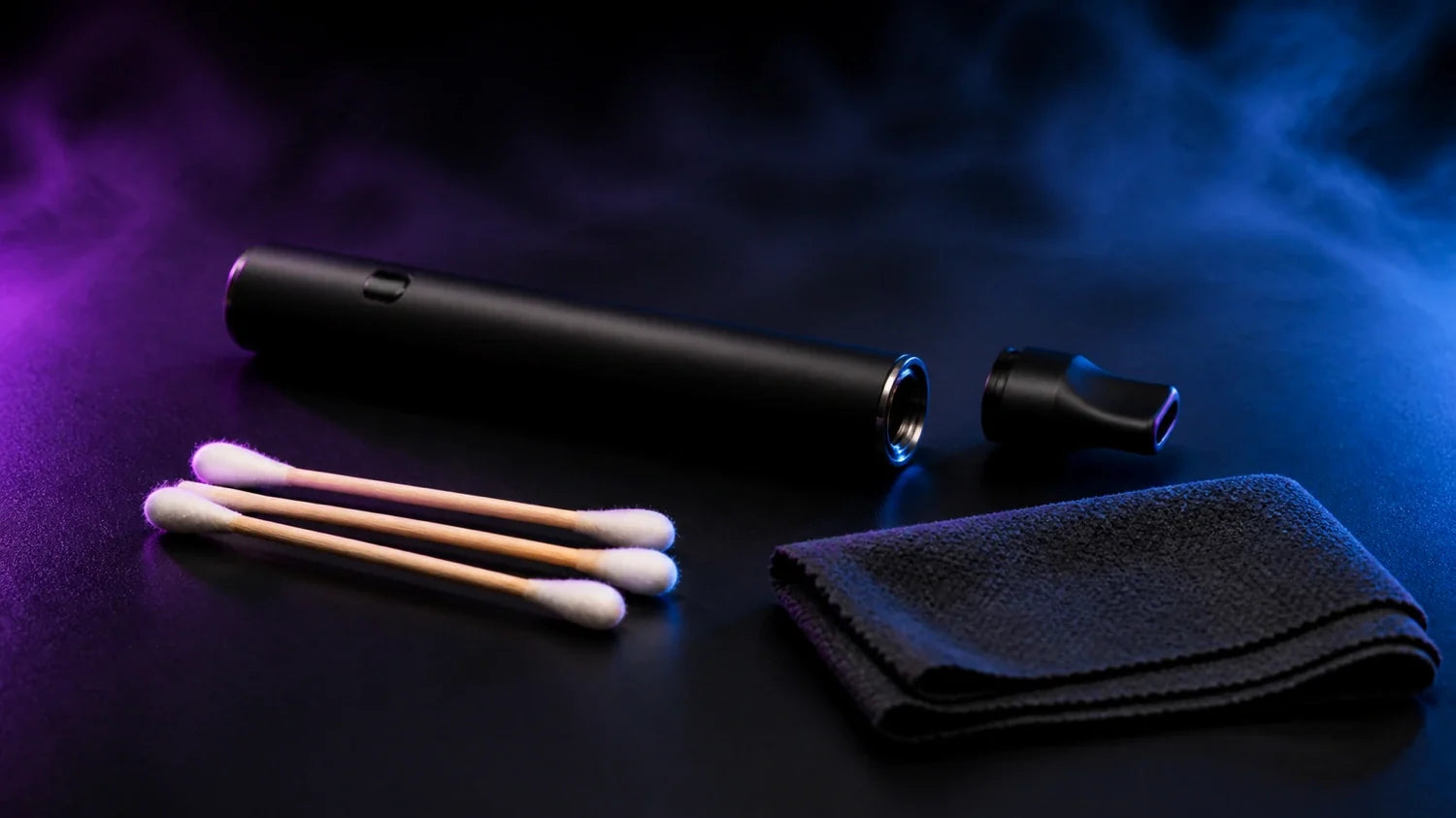
- Beforehand, clean the device so the contacts and mouthpiece are free of liquid residue.
- Take the return trip and layovers into account.
Travelling responsibly
Vapes are not intended for minors, pregnant or breastfeeding people, or anyone on medication, and vaping is fundamentally not risk-free. When travelling, legal responsibility is added: whoever enters a country bears the responsibility of knowing the applicable rules themselves. This guide reflects the general situation and does not replace legal advice. When travelling, if in doubt, always go with the more cautious option.